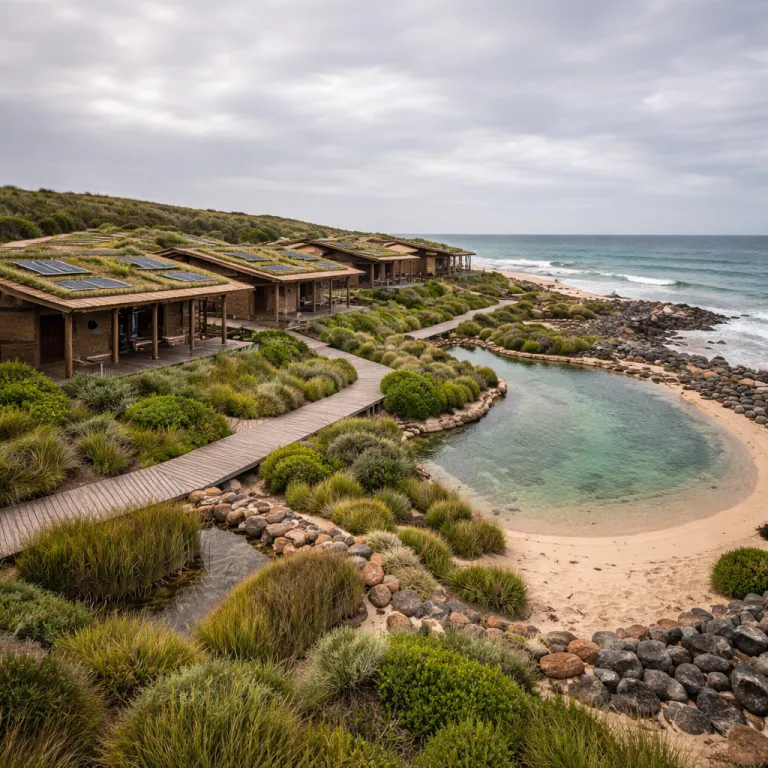
Why the sustainable luxury seaside hotel Indian Ocean scene is changing
The Indian Ocean has become the clearest laboratory for what a truly sustainable luxury seaside hotel can be. Across this ocean, from the Maldives to Mozambique, resorts are learning that guests now want reef-safe experiences as much as they want champagne on arrival, and that shift is quietly reshaping which islands feel relevant for the next decade. For solo explorers, this means your choice of island resort is no longer just about the view, but about whether the sea and the surrounding local communities will still thrive when you return.
Eco-forward properties such as Kudadoo Maldives Private Island, Jetwing Surf on Sri Lanka’s east coast, Ycona Luxury Resort and L’Heure Bleue in the Mozambique Channel show how a high-end coastal retreat in this region can pair solar power, rainwater harvesting and low-impact architecture with serious comfort. These hotels sit on fragile islands and beside vulnerable coral reefs, so their design choices directly influence marine life, from manta rays to nesting turtles, and they prove that barefoot luxury can coexist with rigorous environmental standards. Kudadoo, for example, is designed to run on a substantial solar array, while L’Heure Bleue holds Green Globe certification, signalling how far eco-chic hotels in this region have moved beyond token gestures and into independently audited sustainability programs.
For travelers comparing islands, the context matters as much as the infinity pool. The Maldives now hosts well over a hundred resort islands, while East Africa’s coastline from Tanzania to Mozambique and Kenya is only beginning to see a wide range of small-scale, community-linked projects that treat the ocean as a partner rather than a backdrop. As you read about each destination, think not only about your next beach holiday, but about which sea, which reef and which island culture you want your spending to support.
Maldives and the overwater resort model: still magical, increasingly crowded
There is a reason the phrase sustainable luxury seaside hotel Indian Ocean still makes many travelers picture the Maldives first. The classic image of a private pool villa perched above a turquoise lagoon remains powerful, and when it is done with care for coral reefs and marine life, it can still feel like the purest form of barefoot luxury. Yet with a dense concentration of resort islands now open, the question is no longer whether to go, but how to choose hotels in the Maldives that respect both the sea and the surrounding islands.
High-end projects such as Bulgari Resort Ranfushi, a private island with a limited number of villas scheduled to open in the archipelago, show that the overwater model is not slowing, and many new hotels Maldives wide now market their reef restoration programs as prominently as their wine lists. Kudadoo Maldives Private Island stands out by relying heavily on solar-powered infrastructure and by limiting its villa count, illustrating how a resort can be fully inclusive and still tread lightly on the ocean. When you read property descriptions, look for details about coral nurseries, reduced boat traffic around manta ray cleaning stations and partnerships with local communities on nearby islands.
Seasonality also shapes how sustainable your stay can feel in the Maldives. Travel in February or April and you often find calmer seas, better visibility for snorkeling above coral reefs and less strain on island infrastructure than during peak festive weeks. Shoulder periods around May and October can be especially rewarding for solo travelers who value quieter beaches and more attentive service, and guides such as this analysis of the shoulder season advantage for coastal hotels in May and October can help you time your trip with precision.
Sri Lanka’s south coast and Mauritius: soulful alternatives for solo explorers
For travelers who want a sustainable luxury seaside hotel in the Indian Ocean with more cultural texture than a classic resort island, Sri Lanka’s south coast is back on the map. After a turbulent economic period, a new generation of small, design-led hotels is opening along beaches near Ahangama, Hiriketiya and Tangalle, and many of them work closely with local communities on sourcing and staffing. Properties such as Jetwing Surf on the east coast, with its seashell-inspired structures and renewable energy systems, show how Sri Lanka can balance surf culture, wildlife and low-impact architecture.
Mauritius offers a different rhythm again, with larger hotels spread around a single volcanic island rather than scattered across separate islands like in the Maldives. Here, an upscale eco-conscious beach resort often means a broad lagoon protected by a reef, long beach walks and a choice between classic pool villa suites and more discreet three-bedroom villas with a private pool for friends traveling together. If you are used to premium coastal rentals in places such as Eleuthera or Seacrest Beach, guides to premium beachfront escapes for your next island vacation can provide a useful benchmark when you compare Mauritian room categories and service levels.
Both Sri Lanka and Mauritius reward travelers who want to explore beyond the beach. In Sri Lanka, you can combine a few days at a south coast island resort with train journeys into tea country and visits to historic Galle, while still keeping your overall footprint lower than a multi-island, seaplane-heavy itinerary in the Maldives. In Mauritius, day trips into the interior, rum distillery visits and hikes above the sea give you a sense of the island as a living culture, not just a backdrop for a beach holiday.
East Africa’s Indian Ocean frontier: Mozambique, Tanzania and Kenya
Look west across the Indian Ocean and you reach a coastline that feels like the next chapter for the sustainable luxury seaside hotel Indian Ocean story. From the mangrove creeks of Lamu in Kenya to the sandbanks of Zanzibar and the Bazaruto archipelago in Mozambique, this region offers a quieter, more elemental relationship with the sea. Here, barefoot luxury is less about a long wine list and more about dhow sails at sunset, star-bright skies and the sound of the ocean with almost no other hotels in sight.
Mozambique’s Benguerra Island, part of the Bazaruto group, has become a reference point for low-density island resort development that respects both coral reefs and fishing communities. Kisawa Sanctuary on neighboring Benguerra Island, often referred to as Mozambique Kisawa, combines innovative construction techniques and local materials to reduce building impact, and its villas with private pools are spaced generously to preserve dune vegetation and sea views. This is where the idea of a sustainable luxury seaside hotel in the Indian Ocean meets serious conservation work, with marine protected areas sheltering manta rays, dugongs and a wide range of reef fish.
Farther north, Zanzibar and Mafia Island in Tanzania and the Lamu archipelago in Kenya offer a different balance between culture and coast, with Swahili towns, centuries-old trade routes and the open Indian Ocean beyond. Many of these island resorts are small, often with fewer rooms than a single three-bedroom villa block in a large Maldivian resort, and they rely on local communities for guiding, food and cultural experiences. On Kenya’s Lamu archipelago, for instance, community-led dhow excursions and village visits channel income directly to local boat owners and artisans, while in Tanzania’s Mafia Island Marine Park, lodge-supported reef monitoring projects help protect whale shark and coral habitats. If you are used to curated coastal stays in places like Seacrest Beach Florida, detailed reviews of luxury and premium coastal escapes can help you calibrate expectations before you trade boardwalks for baobabs.
Red Sea ambitions and the wider blue triangle: Saudi Arabia, French Polynesia and beyond
Saudi Arabia’s Red Sea coast is positioning itself as a rival to the established sustainable luxury seaside hotel Indian Ocean destinations, with projects such as Six Senses Amaala promising a regenerative approach and a carefully controlled number of units spread across desert-backed bays. The waters here are technically outside the classic Indian Ocean island belt, yet they share similar coral reef systems and face the same climate pressures. The question for discerning travelers is whether these new resorts will integrate meaningfully with local communities or remain isolated enclaves along the sea.
Six Senses Amaala and its peers talk about restoring coral reefs, limiting boat traffic and designing with the prevailing wind rather than against it, echoing the methods already used by pioneers like Kudadoo Maldives Private Island and L’Heure Bleue in Mozambique. At the same time, destinations such as French Polynesia in the Pacific and the scattered islands of the wider Indo-Pacific remind us that sustainable luxury is now a global conversation, not just an Indian Ocean concern. When you compare these far-flung islands, pay attention to how each resort handles waste, energy and reef protection, not just how many pool villas or private pools appear in the brochure.
For solo travelers, the appeal of these emerging coasts lies partly in their sense of edge. You might snorkel above relatively untouched coral reefs in the Red Sea one season, then read about manta ray migrations in French Polynesia the next, building a personal map of oceans where tourism still feels light on its feet. What matters is choosing hotels and resorts that treat the sea as a living system, whether you are in the Maldives, Sri Lanka, Mozambique or a new Red Sea enclave.
How to choose and book your sustainable Indian Ocean stay
Choosing a sustainable luxury seaside hotel in the Indian Ocean starts with asking precise questions before you book. Look for clear data on renewable energy use, waste management and reef protection, and remember that “A hotel combining luxury amenities with eco-friendly practices to minimize environmental impact.” is the baseline, not the pinnacle. Properties such as Kudadoo Maldives, which is designed around extensive solar power, or Ycona Luxury Resort, with its limited number of eco villas, show what serious commitments look like in practice.
Timing your trip can be as important as choosing the right island. In many parts of the Indian Ocean, February and April bring calmer seas and better underwater visibility, while October often sits in a sweet spot between monsoon systems and peak crowds, making it ideal for a quieter beach holiday with less strain on local infrastructure. Reading up on shoulder season strategies for coastal hotels will help you align your travel dates with both weather patterns and your own tolerance for other guests around the pool.
Finally, consider how you will interact with the ocean once you arrive. Choose snorkeling over motorized sports where possible, join guided reef walks that explain marine life and coral health, and support excursions that are run by local communities rather than imported operators. Whether you end up on a private island in the Maldives, a surf cove in Sri Lanka, a dune-backed pool villa on Benguerra Island or a dhow-facing guesthouse in the Seychelles, the way you move through the sea and along the beach will shape the true impact of your stay.
Key figures shaping sustainable seaside luxury in the Indian Ocean
- Kudadoo Maldives Private Island is designed to operate primarily on renewable energy, with a large solar installation that makes it one of the more advanced solar-powered luxury resorts in the Indian Ocean and a benchmark for other hotels that claim to be eco friendly.
- L’Heure Bleue in Mozambique holds Green Globe certification, placing it among a select group of audited sustainable seaside properties globally according to Green Globe’s program criteria.
- Ycona Luxury Resort has a deliberately small collection of eco villas, illustrating how some island resorts are limiting room count to reduce pressure on local water supplies, reefs and surrounding communities.
- The Maldives now has well over a hundred operational resort islands, a concentration that highlights both the archipelago’s dominance in the luxury segment and the urgency of addressing coral reef degradation and lagoon pollution.
- New projects such as Bulgari Resort Ranfushi in the Maldives and Six Senses Amaala on the Red Sea show how major brands are betting on high-end, low-density developments, with carefully controlled villa and residence numbers rather than mega complexes.
FAQ about sustainable luxury seaside hotels in the Indian Ocean
What defines a truly sustainable luxury seaside hotel in the Indian Ocean ?
A genuinely sustainable luxury seaside hotel in the Indian Ocean combines high-end comfort with measurable environmental practices such as renewable energy, efficient water use and serious waste reduction. It should also protect nearby coral reefs and marine life through policies on anchoring, boat traffic and reef-safe activities. Transparent reporting and third-party certifications add credibility beyond marketing language.
How do these resorts support local communities around the islands ?
Many leading properties employ local staff in a wide range of roles, from management to guiding, and source food, crafts and building materials from nearby villages. As one expert summary puts it, “By employing local staff, sourcing local products, and engaging in community development projects.” these hotels can turn tourism revenue into long-term benefits. When you research a resort, look for specific partnerships and community projects rather than vague promises.
Are sustainable luxury resorts in the Indian Ocean always more expensive ?
Prices vary widely, and some sustainable properties sit at the very top of the market while others are competitively priced against conventional resorts. The operational costs of renewable energy systems and low-density design can be higher, but they are often offset by longer guest stays and strong repeat business. Many travelers find that the added value of healthier reefs, quieter islands and more authentic experiences justifies the rate.
When is the best time to book a sustainable beach holiday in the Indian Ocean ?
For much of the region, February and April offer a balance of good weather and manageable visitor numbers, while October can be an excellent shoulder month with lower prices and calmer resorts. Specific islands have their own micro seasons, so it is worth checking local monsoon patterns for the Maldives, Sri Lanka, Seychelles or Mozambique before committing. Booking in the shoulder seasons also reduces pressure on water, energy and waste systems in small island environments.
How can I check if a resort really protects coral reefs and marine life ?
Look for concrete actions such as reef monitoring programs, coral nurseries, bans on anchoring over reefs and limits on motorized water sports near sensitive areas. Many serious operators publish marine biology reports or partner with NGOs to manage manta ray cleaning stations and turtle nesting beaches. If such information is missing from a resort’s materials, ask directly before you book or consider choosing a property with clearer commitments.