Albania Riviera luxury hotel emerging coastal destination Adriatic: where the shoreline is still wild
The phrase “Albania Riviera luxury hotel emerging coastal destination Adriatic” now quietly circulates among travelers who track shorelines, not trends. Along this albanian riviera, the coast still feels raw and green, with the ionian sea and the wider Adriatic meeting in water so clear you can count pebbles ten metres down. You arrive and realise this is not a polished Mediterranean stage yet, but a coast where the best hotels are only just learning how close to the sea they can dare to build.
Stretching from south Vlore to the beaches near ksamil, the riviera folds into a sequence of coves, cliffs and long arcs of pale sand. Albania has been recognised by European analysts as one of the continent’s most compelling coastal stories, with hotels albania now appearing in the same conversations as Croatia and Montenegro. For a solo explorer, that means a luxury destination where a night in a sea facing coast hotel still costs less than a city business stay in Western Europe, and where the beach is often shared with locals rather than cruise ship crowds.
What sets this albanian coast apart is the proximity between water, road and room. Many new luxury hotel projects sit almost directly above the ionian sea, with hotel rooms angled to catch both sunrise over the mountains and sunset over the water. You feel the Adriatic’s last largely untouched coast is in a brief, fragile window ; open enough for international booking platforms to list a growing number of hotels, but still quiet enough that a short walk from a resort brings you to a village café where the night ends with homemade raki and no printed menu.
From ksamil to south Vlore: reading the coastline like a hotel map
To understand why Albania’s coast is having its moment, trace the drive from ksamil north to south Vlore. The road threads above the ionian sea, with the albanian riviera dropping away in terraces of olive groves, pine and scrubby green slopes that still feel more agricultural than resort ready. Every few kilometres, a new sign points down to a beach, a small hotel or a cluster of hotels albania that hint at what this shoreline will look like once the luxury wave fully arrives.
Ksamil itself has become the shorthand for the country’s most photogenic beach, a shallow lagoon of turquoise water and small islets that feels almost Caribbean in the right light. Here, the first generation of luxury hotel projects is learning how to balance beach clubs, hotel spa facilities and the need to keep at least part of the shore open to the public. On a hot july august afternoon, when peak season crowds arrive from Tirana and nearby Corfu, you see the tension between local beach culture and the new international appetite for curated, serviced sand.
Further north, south Vlore and the so called green coast area near Palasë show a different rhythm. Large scale resort developments such as Collection Palase and the wider Green Coast Resort projects are carving out a more planned luxury destination, with coast hotel complexes, hotel rooms and residences designed for year round use rather than a short summer burst. For travelers, this means a choice between ksamil’s compact, high energy beach scene and the more expansive, master planned stretches of the riviera, where the night is quieter and the sea feels closer to the wild ionian than to a city marina.
Where to stay now: early standouts on the albanian riviera
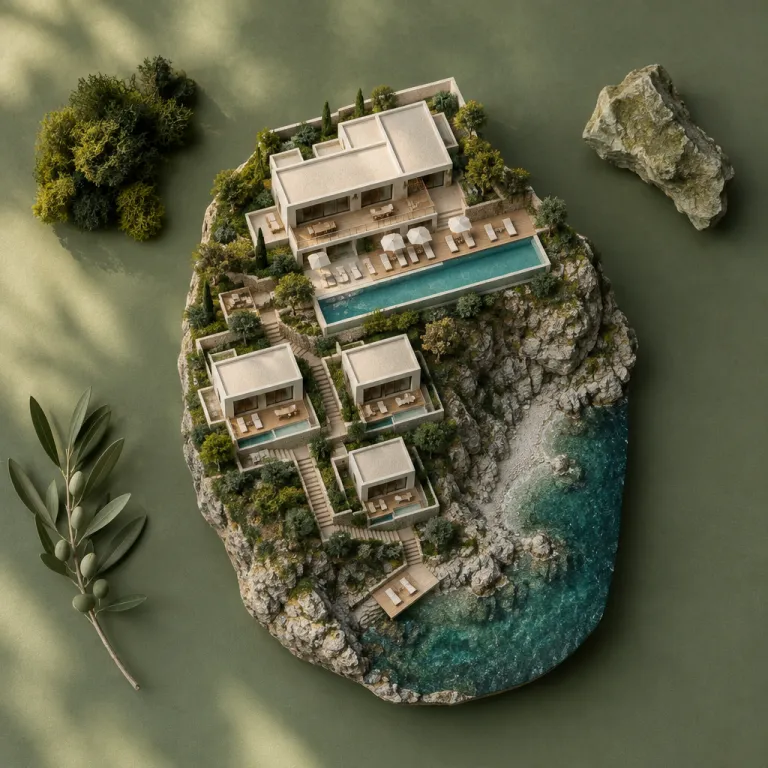
The phrase “Albania Riviera luxury hotel emerging coastal destination Adriatic” becomes tangible when you start looking at specific properties. On a hillside above the water near Jale, Folie Marine Resort & Beach Club has become a reference point for how a coast hotel can lean into the landscape rather than flatten it. Built into the rock with terraced hotel rooms and a pool almost level with the sea, Folie Marine shows how a luxury hotel on this riviera can feel both international in service and unmistakably albanian in setting.
Closer to Vlore, the Green Coast Resort and the broader Green Coast development near Palasë are reshaping a once quiet stretch of shore into a cluster of hotels, villas and serviced apartments. Here, the emphasis is on creating a year round luxury destination, with beach clubs, restaurants and hotel spa facilities designed to function beyond the july august peak season. For travelers used to Croatia’s polished coast, this part of albania feels like a work in progress, but the water is just as clear and the night skies are darker, with fewer lights along the beach.
International brands are watching closely, and early rumours often mention the MGallery Collection as a natural fit for the region’s more design led properties. A future hotel MGallery on the albanian riviera would likely follow the pattern seen in other emerging coastal markets, where a curated mgallery collection property anchors a new resort area and sets a benchmark for service. Until that happens, independent hotels albania and local coast hotel owners are defining the standard, offering a mix of simple beach rooms and more polished luxury hotel suites that still price below comparable ionian sea resorts in Greece.
Autumn light and shoulder season stays
One of the quiet advantages of this coast is how well it works outside peak season. From late September into November, the albanian riviera settles into a softer rhythm, with the ionian sea still warm enough for swimming and the beach largely returned to locals. For travelers who prefer golden light to crowded sand, this is when Albania feels closest to the “last untouched coast” promise.
Service standards can be more variable once the july august rush ends, as some beach clubs and smaller hotels close or reduce staff. Yet this is also when you find the best balance between price, privacy and weather, especially in areas like south Vlore and the Green Coast developments. For more inspiration on coastal stays beyond summer, look to guides on seaside hotels where autumn is the finest season, then apply that mindset to Albania’s quieter bays.
In practical terms, shoulder season booking gives you more leverage with hotels albania, from late checkout to upgraded hotel rooms with better sea views. The night air cools enough to sleep with windows open, letting the sound of the water replace air conditioning. For a solo explorer working remotely, this is when a coast hotel on the albanian riviera becomes a viable base for a week or more, with enough open cafés and restaurants to keep things interesting without the intensity of peak season traffic.
Infrastructure, access and the art of arriving on an emerging coast
Every emerging riviera faces the same question ; how do you reach it without losing the magic on the way. Albania is no exception, and the current answer involves a mix of airports, ferries and mountain roads that reward patience with serious sea views. For now, the journey is part of the experience, especially if you care as much about the approach to the coast as the hotel itself.
Most international travelers fly into Tirana, then drive south towards Vlore and the albanian riviera, a route that improves each year but still includes winding sections over the Llogara Pass. The reward is a first glimpse of the ionian sea from high above, with the coast laid out in a sweep of blue and green that makes the drive feel like a deliberate prelude to the beach. Others route via Corfu, taking a short ferry to Sarandë, which places you closer to ksamil and the southern resorts but adds a layer of cross border logistics to your booking.
As luxury hotel projects multiply, the infrastructure will inevitably follow, but for now there are gaps between destination potential and on the ground delivery. Road signage can be inconsistent, public transport is limited along the coast, and service standards vary widely between hotels albania, even within the same price bracket. For travelers who care about the art of arrival, it is worth reading guides such as the art of arriving at a remote coastal hotel and applying the same planning discipline here ; arrange transfers in advance, confirm late night check in, and choose a coast hotel that understands how important the first impression of the sea really is.
Comparing Albania’s ascent with its Adriatic neighbours
To place the phrase “Albania Riviera luxury hotel emerging coastal destination Adriatic” in context, you need to look north along the same sea. Croatia’s dalmatian coast and Montenegro’s bays have already lived through their own transformation, moving from quiet, under the radar shores to fully mapped luxury destination status. Albania now sits at an earlier stage of that curve, with fewer international flags but more open space between developments.
Montenegro’s recent boom, for example, has been driven by large scale resort investments and the arrival of global brands along the balkan coast. Analyses of that shift, such as those examining why luxury hotel groups are converging on the Adriatic, offer a useful template for what may happen in albania. The same ionian sea and Adriatic light, the same appeal of a coast that still feels new to many travelers, but with different cultural textures and price points.
For now, Albania’s advantage lies in its relative lack of cruise ship traffic and its still modest number of large resorts. You can stay in a luxury hotel on the albanian riviera and still drive ten minutes to a beach where the only infrastructure is a single café and a line of umbrellas. That balance will not last forever, which is why early adopters are paying attention to hotels albania now, rather than waiting until every bay has a polished resort and a fully booked peak season calendar.
Who is going now: early adopters, solo explorers and value driven hedonists
The current audience for this coast is surprisingly specific, and you may recognise yourself in it. Early adopters who once chased under the radar islands in Greece or Croatia are now turning their attention to the albanian riviera, drawn by the combination of clear water, low prices and the sense of being slightly ahead of the curve. They are joined by European couples and solo travelers who want a Mediterranean style beach experience without Mediterranean level crowds or costs.
For the solo explorer, Albania offers a rare mix of independence and welcome. English is widely spoken in the main resort areas, especially in hotels albania and beach clubs, but the culture still feels unfiltered, with family run restaurants and small bars shaping the night more than international chains. You can spend the day swimming in the ionian sea, then walk back to a coast hotel where the staff remember your name after one stay, a detail that still feels more common here than in more saturated luxury markets.
Value driven hedonists are another key segment, attracted by the idea of a luxury destination where a sea facing hotel room, a hotel spa treatment and a long beach lunch still cost less than a single night in some Western European capitals. They are booking stays in places like Folie Marine, Green Coast and the emerging Collection Palase developments, often combining a few nights in a more polished luxury hotel with simpler stays further along the coast. For them, the phrase “Albania Riviera luxury hotel emerging coastal destination Adriatic” is not a marketing line but a practical equation ; more water, more space, more night life per euro spent.
What to expect from the hotel experience
Service on the albanian riviera is improving fast, but it is not yet uniform. In one coast hotel, you may find staff trained to international standards, a refined hotel spa and a wine list that nods to both local and global producers. Ten kilometres away, another hotel might offer a spectacular beach and generous rooms but a more improvised approach to service, especially during peak season when july august crowds stretch small équipes.
Room categories can also vary widely, so read descriptions carefully when booking. Some properties label any partial sea glimpse as a “sea view”, while others reserve that term for rooms where you can literally watch the ionian sea from bed with the balcony doors open. If proximity to the water matters to you, prioritise hotels where the architecture steps down towards the beach, as seen at Folie Marine and several Green Coast and Collection Palase projects.
Night life is concentrated in a few hubs, with beach clubs in ksamil, Dhërmi and Jale drawing a younger crowd during peak season. Outside july august, the rhythm slows, and the best evenings are often spent on a hotel terrace, listening to the water and planning the next day’s drive along the riviera. For many travelers, that quieter, more elemental experience is precisely why they choose Albania over more developed Adriatic coasts.
The trade offs of arriving early: construction, gaps and the long view
Every emerging coast asks the same question ; do you want to be early, or do you prefer to wait until everything is finished. On the albanian riviera, being early means accepting a certain amount of construction noise, uneven service and occasional logistical friction. In return, you get beaches that still feel uncrowded, hotel rates that have not yet caught up with demand, and the sense of watching a luxury destination take shape in real time.
Construction is most visible around south Vlore, Green Coast and the Collection Palase area, where cranes and half built resorts share the skyline with the ionian sea. Some coast hotel properties manage this well, orienting hotel rooms and public spaces away from active building sites, while others feel more embedded in a work zone. When booking, it is worth asking directly about nearby projects, especially if you plan to spend long days by the hotel pool or beach rather than exploring the wider riviera.
Service gaps are the other main trade off, particularly outside peak season when staffing levels drop and some facilities close. A hotel spa that feels fully operational in july august may offer a reduced menu in October, and certain beach clubs may not open at all once the main crowds leave. Yet for many travelers, especially solo explorers and couples who value space over polish, these imperfections are part of the charm ; a reminder that the phrase “Albania Riviera luxury hotel emerging coastal destination Adriatic” still describes a work in progress, not a finished product.
Learning from Croatia’s and Montenegro’s evolution
Looking at Croatia’s dalmatian coast offers a clear lesson for anyone considering Albania now. Two decades ago, towns like Hvar and Dubrovnik were still relatively quiet, with a small number of luxury hotels and a lot of underused waterfront. Today, they are fully integrated into the global tourism circuit, with peak season crowds, high prices and a level of polish that leaves little room for improvisation.
Montenegro’s rapid rise along the Adriatic shows a similar pattern, with large scale developments transforming once sleepy bays into high density luxury enclaves. Albania is at an earlier, more flexible stage, where independent hotels albania, local investors and a few international players are still negotiating what kind of riviera this will become. For travelers, the question is not whether the coast will change, but how quickly, and whether you want your first memory of the ionian sea here to include cranes or a more open horizon.
For now, the balance still favours the early visitor. You can swim in clear water, stay in a luxury hotel that sits almost directly on the beach, and drive between resorts without hitting the kind of traffic that defines peak season in more mature Mediterranean destinations. The trade off is that you need to plan more carefully, accept a few rough edges, and approach the albanian riviera with the mindset of someone who values proximity to the sea and authenticity over perfectly choreographed service.
How to choose and book your stay on Albania’s emerging coast
Choosing the right hotel on this riviera starts with a simple question ; how close to the water do you want to be. Some travelers prioritise a coast hotel where they can walk from bed to beach in under a minute, even if that means accepting simpler interiors or fewer amenities. Others prefer a luxury hotel set slightly back from the sea, with a stronger focus on hotel spa facilities, larger hotel rooms and a more controlled environment.
When you search for hotels albania along the albanian riviera, pay attention to both geography and elevation. Properties in ksamil and Sarandë often sit directly on or just above the beach, while many resorts near south Vlore and Green Coast are built on terraces, trading immediate sea access for wider views over the ionian sea. Satellite images and guest photos can be more revealing than marketing descriptions, especially when you care about how the hotel relates to the water.
Booking strategy matters too, particularly around july august when peak season demand compresses availability. For high summer, reserve your preferred coast hotel several months in advance, especially if you want specific room types or a particular orientation towards the sea. Outside peak season, you can be more flexible, using shorter booking windows to respond to weather forecasts and last minute rate drops, which are still common as Albania fine tunes its pricing for a luxury destination audience.
Matching hotels to travel styles
Solo explorers often do best in smaller, design forward properties where staff quickly learn their preferences. While the term “boutique hotel” is overused elsewhere, here it usually signals a place where the owner is present, the number of hotel rooms is manageable and the relationship with the beach feels personal rather than industrial. For this audience, a coast hotel in Jale, Dhërmi or near Folie Marine can be ideal, combining access to the ionian sea with enough night life to avoid isolation.
Couples and small groups may prefer larger resorts in Green Coast or Collection Palase, where multiple restaurants, beach clubs and pools create a self contained environment. These developments are designed as year round communities, with infrastructure that supports longer stays and repeat visits, even if some facilities still feel new. For travelers who value predictability and a full suite of services, this part of the albanian riviera offers a reassuring middle ground between raw coastline and fully urbanised resort.
Whatever your style, keep the core appeal in mind ; this is still the Adriatic’s last largely untouched coast, a place where the phrase “Albania Riviera luxury hotel emerging coastal destination Adriatic” describes a living transition rather than a finished brand. Choose a hotel that respects the water, plan for a few imperfections, and you will likely leave with the sense that you have seen a riviera in the brief moment before it becomes a household name. That is a rare kind of luxury, and one that no amount of polished service can replicate once the coast is fully built out.
Key figures shaping Albania’s coastal rise
- According to the World Bank, Albania recorded more than 7 million international tourist arrivals recently, a sharp increase compared with a decade earlier, with a significant share heading to the albanian riviera and the wider ionian sea coast.
- European travel industry reports consistently rank Albania among the most affordable Mediterranean and Adriatic destinations, with average hotel rates often 30 to 40 percent lower than comparable properties in Croatia or Greece during peak season.
- UNESCO lists Butrint and Gjirokastër as World Heritage Sites within easy reach of the southern coast, reinforcing the riviera’s positioning as both a beach and culture driven luxury destination.
- Analysts tracking Adriatic development note that Albania’s coastline remains far less built up than neighbouring Croatia and Montenegro, with a lower density of large resorts per kilometre of coast, leaving more open space for future luxury hotel projects.
- Ferry connections between Corfu and Sarandë, combined with road improvements from Tirana to south Vlore, have reduced travel times to key coastal hubs, making multi stop itineraries along the albanian riviera more feasible for international visitors.
FAQ: planning a luxury stay on Albania’s riviera
Is Albania’s riviera safe and suitable for solo travelers
Albania’s main coastal towns and resort areas are generally considered safe for solo travelers, including women, especially in well lit zones around hotels and established beach clubs. As with any emerging destination, it is wise to use standard precautions, rely on registered taxis or hotel arranged transfers at night, and choose accommodations with strong recent reviews. Solo explorers often report a welcoming atmosphere, with locals and hotel staff keen to help with practical details.
When is the best time to visit the albanian riviera
The most popular period is july august, when temperatures are highest and all beach clubs, restaurants and hotels are fully open. However, many discerning travelers prefer late May to June or September to early October, when the ionian sea is warm, the beaches are less crowded and hotel rates are lower. Outside these months, some coastal properties close or reduce services, so check availability carefully before booking.
How does Albania compare with Croatia for luxury beach stays
Croatia offers a more mature luxury infrastructure, with a higher concentration of five star hotels, marinas and fine dining options along its dalmatian coast. Albania, by contrast, is earlier in its development, with fewer international brands but more open coastline, lower prices and a stronger sense of being ahead of the mainstream. Travelers who prioritise polished service may lean towards Croatia, while those who value space, affordability and a feeling of discovery often choose the albanian riviera.
Do I need a car to explore Albania’s coast
A car is not strictly necessary if you plan to stay in a single resort area such as ksamil or south Vlore, where taxis and local transfers can cover short distances. However, renting a car gives you far more flexibility to explore smaller beaches, hilltop villages and different hotel options along the riviera. Road conditions are improving but can still be challenging in places, so confident driving and daytime travel are recommended.
What type of luxury hotels can I expect to find
The albanian riviera currently offers a mix of independent seaside properties, design forward small hotels and larger resort style complexes in areas like Green Coast and Collection Palase. While there are fewer global brands than in neighbouring countries, service levels are rising quickly, and some hotels now offer facilities such as full service spas, curated beach clubs and high quality dining that meet international luxury expectations. As development continues, more branded luxury hotel projects are expected to join the existing hotels albania along this coast.